Starting yoga is often easier than maintaining a regular practice. Many people begin with enthusiasm, attend a few sessions, and then struggle to continue because of busy schedules, work responsibilities, family commitments, or a lack of motivation. Developing a sustainable routine requires planning, realistic expectations, and the right kind of guidance.
Live online yoga classes offer a convenient way to practise yoga from home while following an instructor in real time. You can save commuting time, attend scheduled sessions, and create a practice that fits your lifestyle. However, the benefits of this convenience become more meaningful when you attend regularly rather than practising only when you feel motivated.
The good news is that you do not need to practise for hours every day to develop a habit. Small, achievable steps can help you make yoga a consistent part of your routine.
In this guide, we will explore ten practical strategies to help you stay consistent with online yoga sessions and maintain a healthier lifestyle.
1. Set a Realistic Yoga Goal
One of the most common reasons people struggle with consistency is setting goals that are too ambitious. A beginner may decide to practise for an hour every morning, even though their current schedule does not allow it. Missing a few sessions can then lead to disappointment and eventually giving up.
Instead, start with a goal that feels achievable.
For example, you could aim to attend three live sessions per week or dedicate 20 to 30 minutes to yoga on selected days. Once the routine becomes familiar, you can adjust the frequency and duration according to your needs.
Your goal should reflect your current fitness level, daily responsibilities, and personal wellness priorities. Whether you want to improve flexibility, develop strength, manage stress, or support weight management, consistency is more useful than an unrealistic schedule.
Remember that progress does not require perfection. Missing one session does not mean you have failed. Return to your routine at the next available opportunity.
2. Choose a Fixed Time for Your Classes
Having a specific practice time can make it easier to remember and prioritise yoga. When you leave your sessions until you have free time, other responsibilities can quickly take over your day.
Choose a time that suits your lifestyle and energy levels.
Morning yoga may work well for people who prefer to practise before starting work. Evening sessions may be more convenient for those with busy mornings. The best time is the one you can follow comfortably over the long term.
Consider these simple strategies:
- Select specific days and times for your sessions.
- Add each class to your digital calendar.
- Set a reminder a few minutes before the class begins.
- Avoid scheduling unnecessary activities during your practice time.
A fixed schedule turns yoga into a planned activity rather than something you do only when convenient.
3. Prepare Your Space Before the Session
A comfortable practice environment can reduce the small obstacles that make people postpone exercise. Searching for a mat, moving furniture, or adjusting your device immediately before a class can become an excuse to skip it.
Prepare your space in advance so that you can begin without unnecessary effort.
Keep your yoga mat in an accessible location. Place any required props nearby, and make sure there is enough room to extend your arms and legs safely. If you attend live classes using a phone, tablet, or laptop, position the device securely so you can see the instructor clearly.
You should also check your internet connection and camera settings before the session if your class requires them. You do not need a dedicated yoga room. A quiet, clean corner of your home can be sufficient for a regular practice.
4. Start Small Instead of Doing Too Much
Many beginners believe they must complete long or intense sessions to make progress. This expectation can create unnecessary pressure, particularly when they are balancing work, family, and other commitments.
A better approach is to begin with a manageable schedule and gradually build your practice.
If you are new to yoga, start with beginner-friendly sessions that introduce basic postures, breathing techniques, and relaxation. As your confidence develops, you can explore longer classes or different styles under appropriate guidance.
Shorter sessions can also be useful on particularly busy days, provided they are suitable for your needs. However, if you have registered for a scheduled live class, follow its planned duration and discuss alternative options with your instructor when necessary.
The aim is to build a routine that feels sustainable rather than exhausting. Avoid increasing the intensity too quickly, and allow enough recovery time between demanding sessions.
5. Join Live Sessions for Structure and Accountability
Practising independently can be convenient, but it may be difficult to stay motivated without a clear schedule. You might postpone a session because there is no fixed start time or spend too much time deciding which exercises to perform.
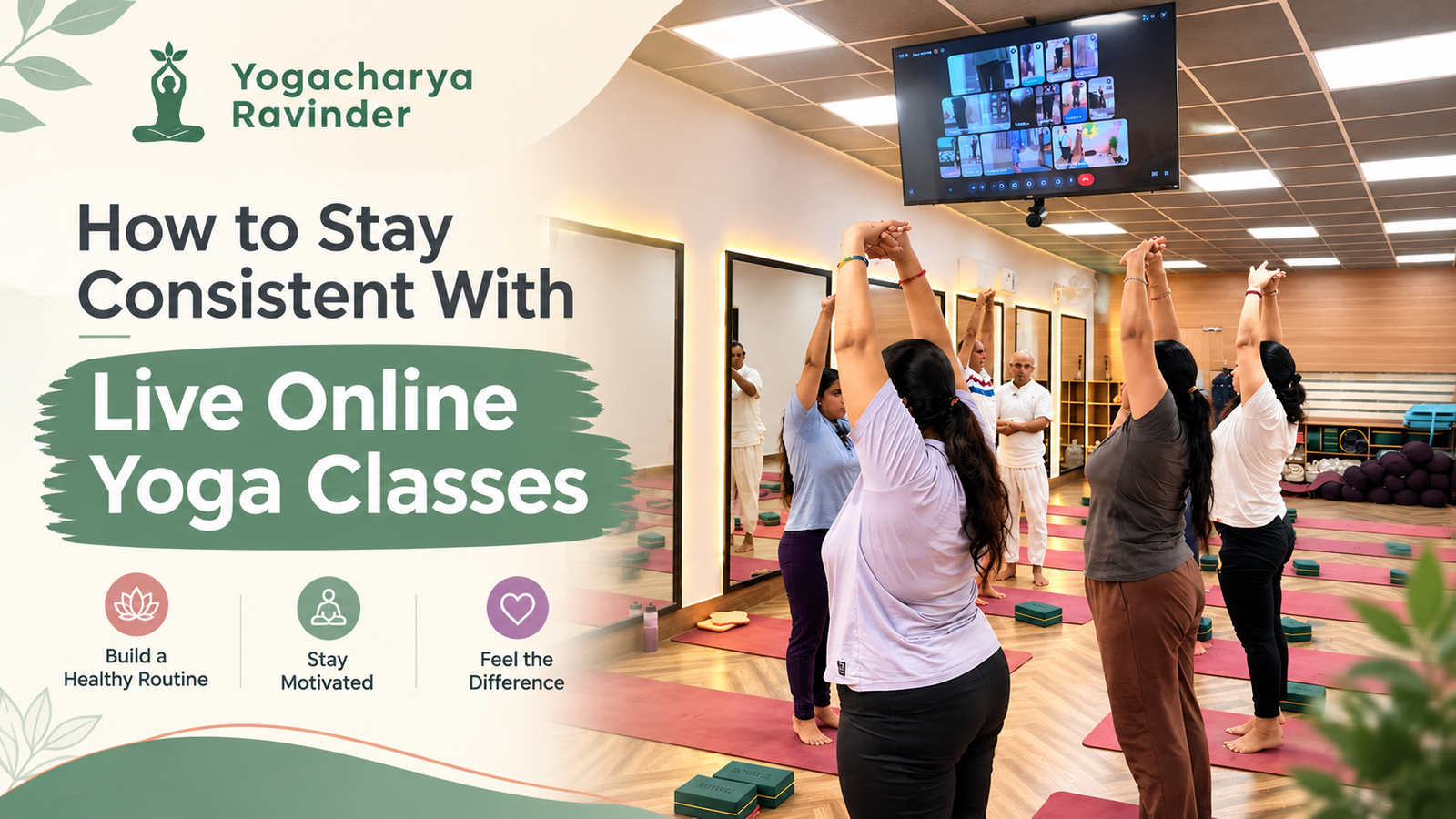
Live online yoga classes can provide a more structured experience. You join at a scheduled time, follow an instructor through the session, and participate in a planned sequence of movements.
This structure may encourage you to treat yoga as an important appointment rather than an optional activity.
Depending on the class format, real-time guidance may also help you understand the movements, ask questions, and receive feedback. These features can be particularly valuable when learning unfamiliar postures.
Choose a program with timings and teaching methods that suit your routine. If you prefer guidance while practising from home, you can explore the sessions offered by Yogacharya Ravinder to learn more about available online yoga options.
6. Track Your Progress Beyond Physical Appearance
People sometimes lose motivation because they measure success only through weight changes or visible physical results. Yoga can support several aspects of general well-being, and not all improvements are immediately visible.
Instead of focusing on a single outcome, keep track of different aspects of your practice.
For example, you might record:
- How many sessions you completed each week.
- Whether certain movements feel more comfortable.
- Changes in flexibility, balance, or strength.
- Your ability to follow breathing exercises.
- How manageable your routine feels.
- Whether you find it easier to make time for yourself.
You can maintain a simple notebook or use a calendar to mark completed sessions. Tracking attendance is particularly useful because it shifts your attention towards actions you can control. Rather than worrying about how quickly results appear, you can focus on building the habit of showing up.
Physical progress varies from person to person, so avoid comparing your journey with someone else’s.
7. Find a Qualified Instructor and the Right Class Level
The type of class you choose can influence how comfortable you feel about continuing yoga. A session that is too advanced, too intense, or poorly matched to your needs may make it difficult to maintain a regular schedule.
Before joining a program, consider your experience level, fitness goals, preferred class timings, and the instructor’s approach.
Beginners should look for sessions that explain basic postures, provide suitable modifications, and encourage participants to work within their abilities. More experienced practitioners may prefer sessions that offer a greater variety of movements or progressive challenges. A supportive instructor can also help you understand how to adapt your practice when certain movements feel uncomfortable.
Do not feel pressured to keep up with other participants. Yoga is an individual practice, and flexibility, strength, and balance develop at different rates. If you have a medical condition, an injury, or particular physical limitations, seek appropriate professional advice before starting and inform your instructor about relevant restrictions.
8. Build Yoga Into Your Existing Daily Routine
One way to make a new habit easier to maintain is to connect it with an activity you already do regularly. For example, you could prepare your yoga space after your morning routine, set a reminder after finishing work, or place your mat somewhere visible as a reminder of your planned session.
These small environmental cues can reduce the effort required to remember your practice. You can also prepare for the following day in advance. Check your class schedule, arrange your clothing, and make sure your device is ready.
Avoid relying entirely on motivation because motivation naturally changes from day to day. A repeatable routine helps you continue even when you do not feel particularly enthusiastic.
At the same time, remain flexible. If an unexpected responsibility interrupts your schedule, adjust your plan and return to it when possible rather than abandoning the entire week.
9. Make Your Practice Enjoyable
Consistency becomes easier when your routine is something you value rather than another obligation on your to-do list.
Explore different beginner-appropriate yoga styles with guidance to discover what you enjoy. Some people prefer gentle stretching and relaxation, while others enjoy sessions that focus on movement, balance, and strength.
You can also make your environment more comfortable by choosing a quiet space, wearing suitable clothing, and minimising distractions.
Avoid judging every session by how difficult it feels. Some days you may have more energy, while on other days a gentler practice may be more appropriate.
Give yourself credit for completing a session, even when it does not feel perfect. Developing a sustainable habit is about making yoga a regular part of your life, not turning every practice into a test of performance.
10. Have a Plan for Missed Classes
Even with a well-planned schedule, you may occasionally miss a session because of work, travel, family responsibilities, or fatigue. The important thing is how you respond afterwards.
Avoid thinking that one missed class has ruined your progress. Instead, identify what prevented you from attending and decide whether your routine needs a small adjustment.
For example, if early mornings are consistently difficult, consider an evening session. If your work schedule changes frequently, look for a program with suitable alternative timings. You can also plan your weekly schedule in advance so that one unexpected event does not disrupt every session.
Do not try to compensate for missed classes by suddenly doubling your practice or pushing yourself beyond your limits. Resume your usual schedule and adjust gradually when necessary.
Rest is also an important part of a sustainable fitness routine. If you are unwell or unusually fatigued, prioritise your recovery and return to yoga when appropriate.
A Simple Weekly Plan for Staying Consistent
Beginners can use a flexible weekly plan as a starting point. Adjust the frequency, intensity, and duration to your needs and your instructor’s recommendations.
| Day | Suggested activity |
| Monday | Beginner live yoga session |
| Tuesday | Gentle mobility or a comfortable walk |
| Wednesday | Live yoga session |
| Thursday | Rest or light stretching |
| Friday | Live yoga session |
| Saturday | Optional gentle practice or relaxation |
| Sunday | Rest and plan the coming week |
This schedule is an example, not a rule. Your ideal routine depends on your experience, health, energy levels, and personal commitments.
If you are new to yoga, begin gradually and avoid practising through pain. Consistency should support your well-being rather than create additional physical stress.
For more yoga guidance and related wellness topics, explore the Yogacharya Ravinder blog collection. You can discover useful information to complement your learning and help you make informed decisions about your practice.
Conclusion
Staying consistent with live online yoga classes is easier when you build a realistic routine around your lifestyle. Choosing a fixed time, preparing your practice space, starting gradually, and tracking your progress can help you overcome common barriers.
Live instruction can also provide structure, guidance, and accountability while allowing you to practise from home. However, the most suitable class is one that matches your current ability, personal goals, and schedule.
Remember that missing an occasional session does not mean you have failed. Focus on returning to your routine, listening to your body, and making steady progress without unnecessary pressure.
With patience and a sustainable plan, yoga can become a regular part of your lifestyle and support your long-term wellness goals. Start with manageable steps, remain consistent, and allow your practice to develop naturally over time.
Frequently Asked Questions
1. How often should I attend live online yoga classes?
Beginners can often start with two or three sessions per week and adjust according to their comfort, fitness level, and schedule. The appropriate frequency depends on the type of practice and individual needs.
2. How can I stay motivated to practise yoga every day?
Set realistic goals, choose a convenient time, prepare your space in advance, and track completed sessions. You do not necessarily need to practise every day; a sustainable schedule is more important than following an unnecessarily demanding routine.
3. Are live online yoga classes suitable for beginners?
Yes. Many live online programs offer beginner-friendly sessions with guided demonstrations and modifications. Choose a class that matches your experience level and provides suitable instruction.
4. What should I do if I miss a yoga class?
Resume your planned routine at the next suitable opportunity. If you frequently miss classes, review your schedule and choose timings that fit your daily responsibilities more comfortably.
5. Can live online yoga classes help improve flexibility and fitness?
Regular yoga practice may support flexibility, balance, strength, mobility, and body awareness. Results vary according to the individual, the type of practice, and consistency. Yoga should be combined with other healthy habits appropriate to your goals.