What Are Live Online Yoga Classes?
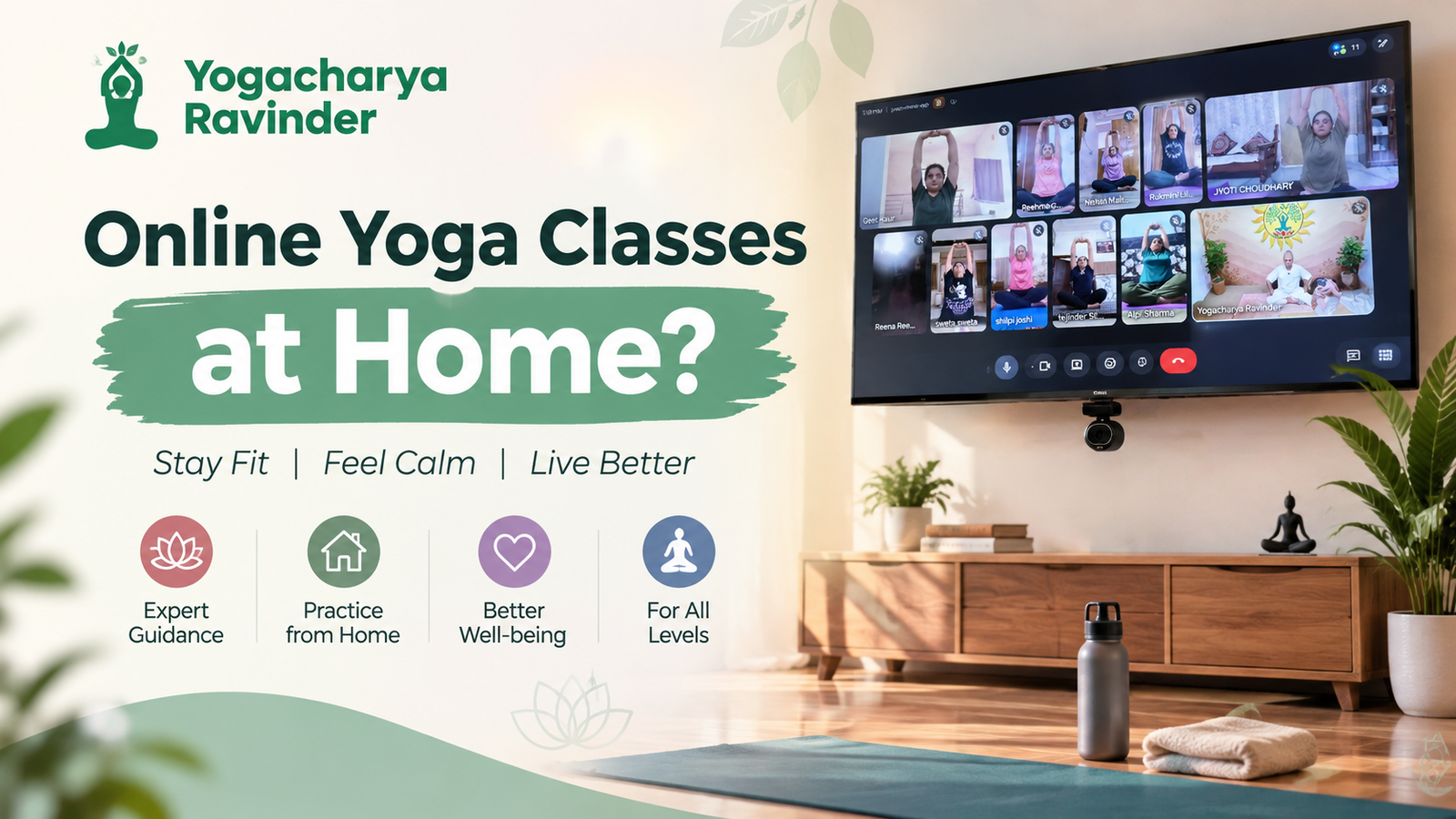
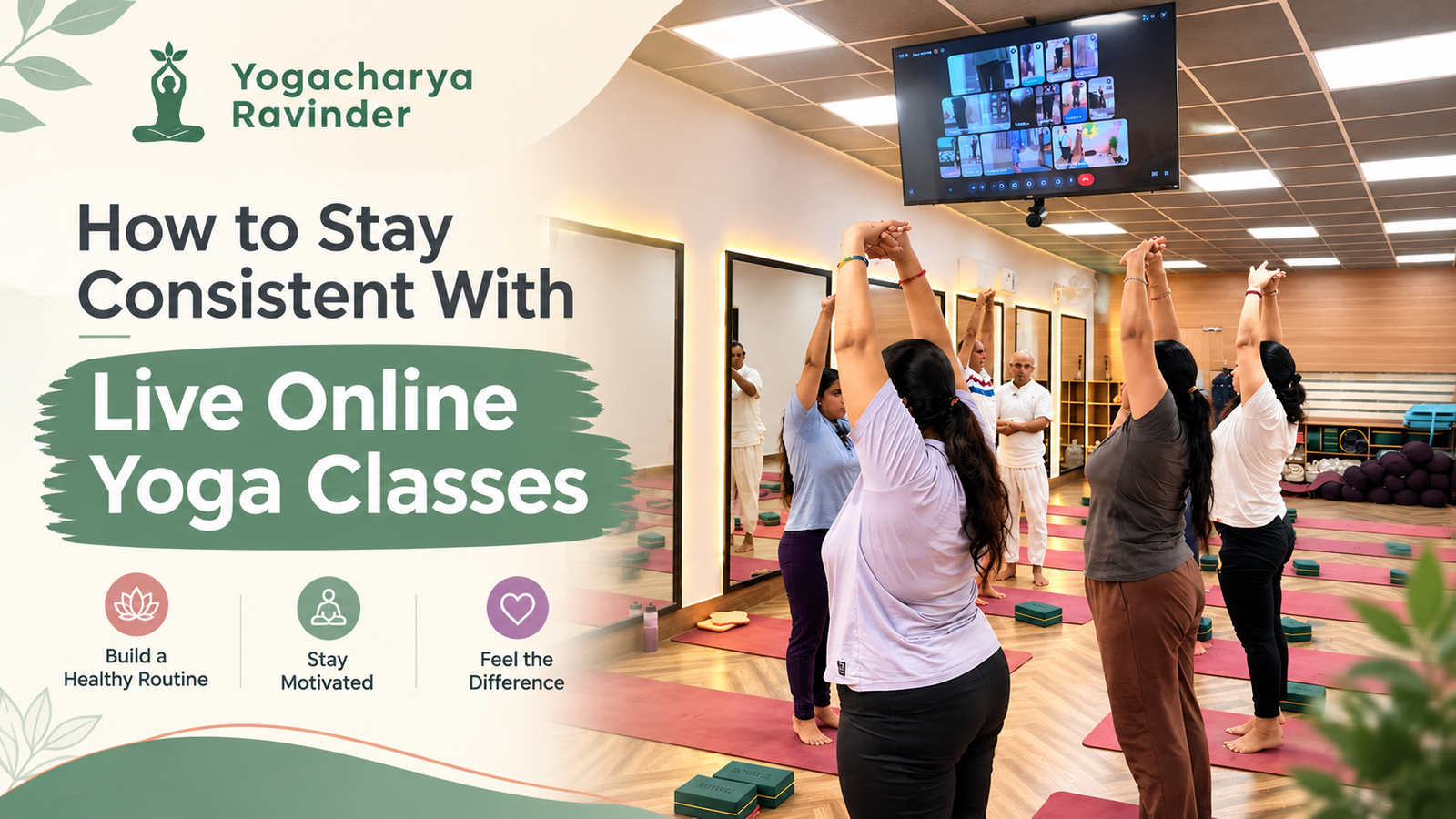
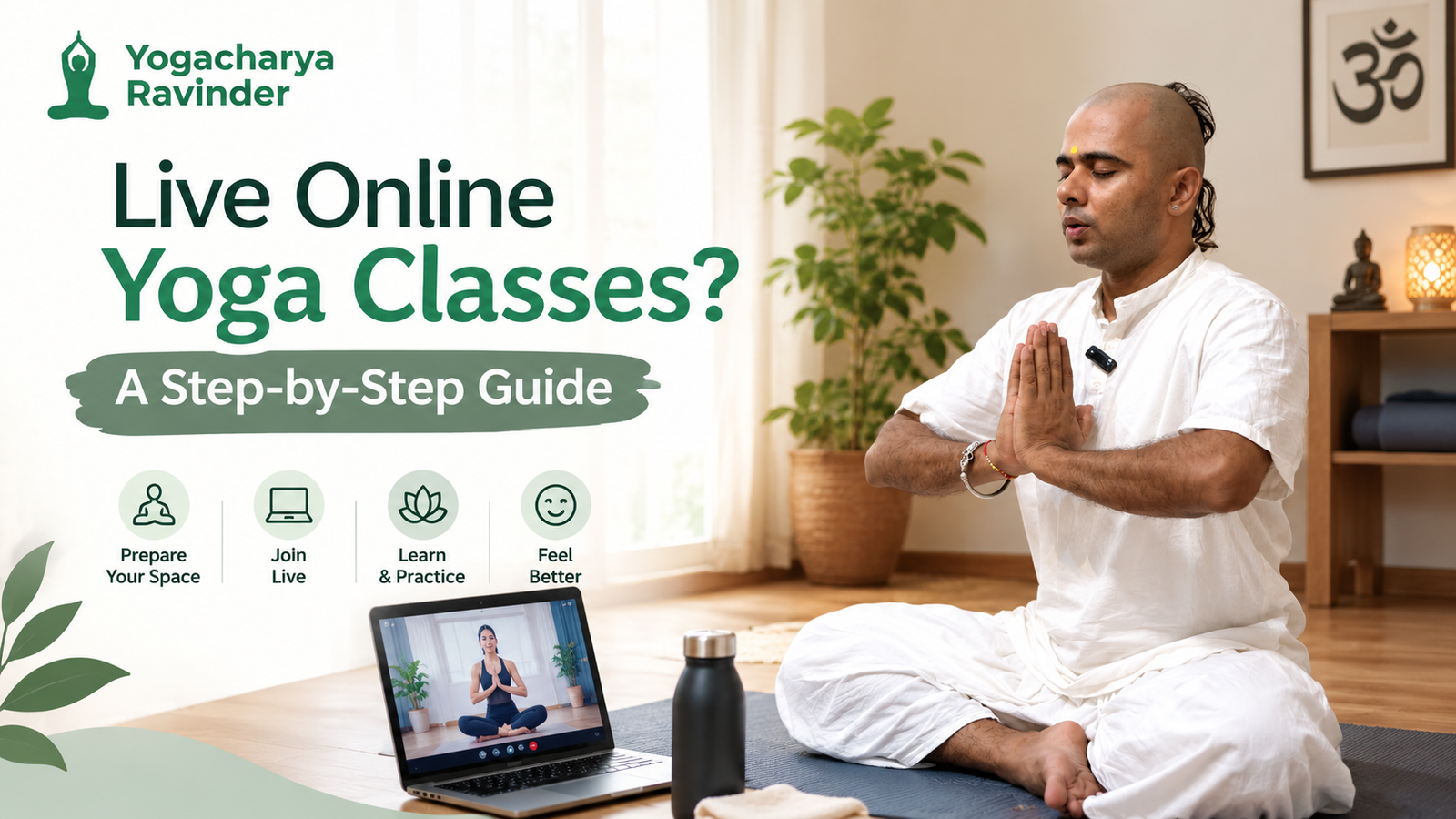
Live Online Yoga Classes are instructor-led sessions conducted through a video conferencing platform or online teaching system. Participants join at a scheduled time and follow the instructor through yoga poses, breathing exercises, stretches, and relaxation techniques. The experience is similar to attending a yoga studio, except you can practice from your own home without traveling.
Depending on the program, sessions may be designed for beginners, intermediate practitioners, or people with specific fitness goals. Some classes focus on flexibility and mobility, while others incorporate strength-building movements, relaxation, and weight-management practices.
For beginners, live instruction can be particularly useful because the teacher can explain movements, suggest suitable modifications, and help you understand the basics of yoga. If you are looking for structured guidance, explore Yogacharya Ravinder’s Yoga Classes for Weight Loss to learn more about guided yoga practice.
Step 1: Choose the Right Yoga Class for Your Goals
Your first step is to select a class that matches your experience level, fitness goals, and daily routine. If you have never practiced yoga before, look for beginner-friendly sessions that explain each movement clearly. You do not need to start with advanced poses or challenging sequences to benefit from yoga.
Before enrolling, consider these factors:
- Experience level: Choose a beginner-friendly class if you are new to yoga.
- Fitness goals: Decide whether you want to improve flexibility, support weight management, manage stress, or establish a regular exercise routine.
- Class timings: Select a schedule that fits comfortably into your day.
- Instructor guidance: Look for a qualified instructor who explains movements and encourages safe practice.
- Class format: Check whether the session is live, prerecorded, individual, or group-based.
For example, someone looking to lose weight may prefer a class that combines suitable yoga movements with a consistent physical activity routine. Someone seeking relaxation may prefer gentle yoga and breathing exercises. Choosing the right class from the beginning can make your experience more comfortable and enjoyable.
Step 2: Prepare Your Space at Home
One of the biggest advantages of Live Online Yoga Classes is that you can practice without traveling to a studio. However, preparing a comfortable space can make your session more enjoyable. You do not need a dedicated yoga room or a large area. A clean, quiet space with enough room to stretch your arms and legs is generally sufficient.
Here is how to prepare:
Find enough space: Make sure you can stand, stretch, bend, and lie down without hitting furniture or other objects.
Choose a comfortable surface: A non-slip yoga mat can provide better grip and cushioning during different poses.
Reduce distractions: Silence unnecessary notifications and inform family members that you will be practicing during the scheduled session.
Ensure proper lighting: Good lighting helps you see the instructor clearly and allows the instructor to observe your posture if your camera is enabled.
Keep essentials nearby: Place a water bottle and small towel within reach.
A comfortable environment helps you focus on your movements instead of worrying about your surroundings.
Step 3: Check Your Device and Internet Connection
Technology plays an important role in online yoga sessions. Before the class begins, make sure your device and internet connection are working properly. You can join using a laptop, tablet, or smartphone, depending on the platform used by your instructor.
For a smoother experience:
- Test your internet connection.
- Check that your speakers or headphones work.
- Make sure your device has sufficient battery or is connected to power.
- Open the meeting link before the scheduled time.
- Position your device on a stable surface.
If the class includes live posture guidance, position the camera so your instructor can see your movements clearly. You may need to adjust the angle depending on whether you are standing, sitting, or lying down.
Ask your instructor about camera requirements and privacy settings before joining. Requirements vary between classes, and you should understand who can see your video. A quick technical check can prevent unnecessary interruptions during your first session.
Step 4: Join the Class a Few Minutes Early
Try to join your first session five to ten minutes before the scheduled start time, if possible.
This gives you an opportunity to settle into your space, check the audio, and become familiar with the online platform. Your instructor may welcome participants, explain how the session will work, and answer basic questions before beginning.
If it is your first time practicing yoga, let the instructor know. You can also mention your experience level, general goals, and any relevant physical limitations.
For example, you might explain that you want to improve flexibility or are looking for a beginner-friendly routine. You do not need to feel embarrassed about asking questions. A good learning environment should make beginners feel comfortable rather than pressured to perform perfectly.
Step 5: Start With Breathing and Warm-Up Exercises
Most beginner-friendly Live Online Yoga Classes start with gentle breathing, simple movements, or a short period of relaxation. This opening phase helps you settle into the practice and prepare your body for the main sequence.
Your instructor may guide you through:
- Slow, comfortable breathing.
- Gentle neck and shoulder movements.
- Wrist and ankle rotations.
- Side stretches.
- Cat-Cow movements for gentle spinal mobility.
- Simple seated or standing stretches.
The exact warm-up depends on the class style and your instructor’s approach. During this stage, focus on following instructions at a comfortable pace. Avoid forcing stretches or holding your breath to complete a movement.
If an exercise feels uncomfortable, stop or ask for a suitable modification. The purpose of a warm-up is to prepare your body, not exhaust it.
Step 6: Learn Basic Yoga Poses With Instructor Guidance
After the warm-up, the instructor will usually introduce the main yoga sequence. If you are a beginner, you may practice foundational postures such as Mountain Pose, Child’s Pose, Cat-Cow, gentle standing stretches, or other movements appropriate to your ability.
The instructor typically demonstrates a pose, explains how to position your body, and guides you through the movement. For example, while practicing Mountain Pose, you may learn how to distribute your weight evenly across your feet, lengthen your spine, and relax your shoulders.
During a live session, you can ask questions if you are unsure about a movement. If your instructor can see your posture, they may also offer verbal feedback or suggest adjustments. Remember that every person’s body is different. You do not have to match the instructor’s flexibility or range of motion.
The goal of your first class is to learn the fundamentals, not to master every pose.
Move slowly, listen to your body, and take breaks whenever necessary.
Step 7: Practice Breathing and Mindful Movement
Breathing is an important part of yoga. Instead of treating yoga as a series of physical exercises, you learn to coordinate comfortable breathing with movement. Your instructor may ask you to inhale during certain movements and exhale during others. You may also practice observing your natural breathing without changing its rhythm.
These techniques can help you pay attention to the present moment and develop greater awareness of your body. Many people choose Live Online Yoga Classes because they want a structured break from their busy schedules. Combining movement with mindful breathing can make the session feel more focused and relaxing.
However, avoid forcing deep breaths or holding your breath for long periods unless the practice is appropriate for you and you have received suitable guidance. If you feel dizzy, breathless, or uncomfortable, stop the exercise and return to normal breathing.
Step 8: Finish With Cool-Down and Relaxation
As the main sequence comes to an end, your instructor may guide you through gentle stretches and relaxation. This phase allows you to slow down after the physical movements and finish the session calmly.
Depending on the class, you may practice seated stretches, comfortable floor positions, or Savasana, also known as the Corpse Pose. During Savasana, you generally lie on your back with your body relaxed while following the instructor’s relaxation guidance. Some instructors may also include a short meditation or a few minutes of quiet breathing.
You do not need to achieve a particular mental state during relaxation. Simply rest comfortably and follow the instructions as best you can. If lying on your back is uncomfortable, ask your instructor about an alternative position.
Step 9: Ask Questions and Review Your Experience
After the practice, your instructor may provide time for questions or feedback. This is a useful opportunity to discuss anything that felt difficult, ask about modifications, or clarify instructions you did not fully understand.
You can reflect on a few simple questions:
- Was the class suitable for my experience level?
- Could I follow the instructor’s instructions?
- Did I feel comfortable with the pace?
- Were any movements difficult or uncomfortable?
- Does the class timing fit my routine?
Your first session can help you decide whether the instructor’s teaching style and class structure suit your needs. You should not expect immediate changes in flexibility, fitness, or body weight after one session. Yoga is a gradual practice, and progress depends on several factors, including consistency, overall activity, nutrition, and individual circumstances.
Step 10: Build a Consistent Yoga Routine
After completing your first class, consider creating a realistic schedule for future sessions. For example, you could begin with two or three sessions per week and adjust your routine according to your comfort, availability, and instructor’s recommendations.
To make the habit easier to maintain:
- Choose class timings that work with your daily responsibilities.
- Keep your yoga mat and other essentials ready.
- Set reminders for scheduled sessions.
- Track your attendance and how you feel after practicing.
- Increase the difficulty gradually rather than rushing into advanced poses.
If your goal is weight management, combine yoga with balanced nutrition and other suitable physical activities. Yoga can support an active lifestyle, but results vary, and no single exercise guarantees weight loss.
You can also explore more helpful articles on our Yoga and Wellness Blog for practical guidance on building a sustainable routine. With regular practice and appropriate instruction, yoga can become a manageable part of your everyday life.
Common Mistakes to Avoid in Your First Live Online Yoga Class
A little preparation can help you enjoy your first session and avoid unnecessary discomfort.
Trying to copy advanced poses: Focus on your own ability instead of comparing yourself with the instructor or other participants.
Skipping the warm-up: Follow the recommended preparation instead of immediately attempting difficult movements.
Ignoring discomfort: Stop if you experience pain, dizziness, or unusual breathlessness. Ask for an alternative when needed.
Using an unsuitable space: Make sure your mat is stable and the surrounding area is free from obstacles.
Expecting instant results: Treat your first class as an opportunity to learn rather than a test of fitness or flexibility.
Choosing an unrealistic schedule: Start with a routine you can maintain rather than committing to more sessions than your lifestyle allows.
Avoiding these mistakes can help you develop a safer and more enjoyable yoga practice.
Conclusion
Your first experience with Live Online Yoga Classes is an opportunity to learn the basics of yoga in a familiar and comfortable environment. From preparing your practice space and checking your device to learning foundational poses and finishing with relaxation, each stage helps you become more confident with the process.
You do not need previous experience, exceptional flexibility, or expensive equipment to get started. What matters most is choosing a suitable class, following your instructor’s guidance, and respecting your body’s limits.
If you want to improve flexibility, establish a healthier routine, manage stress, or support your weight-management goals, start at a pace that feels realistic for you.
Explore Yogacharya Ravinder’s Yoga Classes for Weight Loss to learn more about guided yoga practice and take the next step toward a more active lifestyle.
Frequently Asked Questions (FAQs)
1. What happens in your first live online yoga class?
Your first session usually includes a brief introduction, gentle breathing, warm-up exercises, basic yoga poses, and a cool-down or relaxation period. The exact structure depends on your instructor and experience level.
2. Are live online yoga classes suitable for beginners?
Yes. Many live sessions are designed for beginners. Choose a class that matches your current ability and let your instructor know if you are new to yoga.
3. What equipment do I need for live online yoga classes?
A yoga mat, comfortable clothing, a suitable device, and a stable internet connection are generally sufficient. Optional props such as blocks, cushions, or straps may be helpful depending on the poses.
4. How long do live online yoga classes usually last?
Class duration varies by instructor and program. Beginner sessions may last around 20–30 minutes, while other classes may run for 45–60 minutes. Check the schedule before joining.
5. Can I join live online yoga classes for weight loss?
Yes. Yoga can be part of a weight-management routine by supporting physical activity, strength, mobility, and healthy habits. Sustainable weight management also depends on nutrition, overall activity, sleep, and other individual factors.