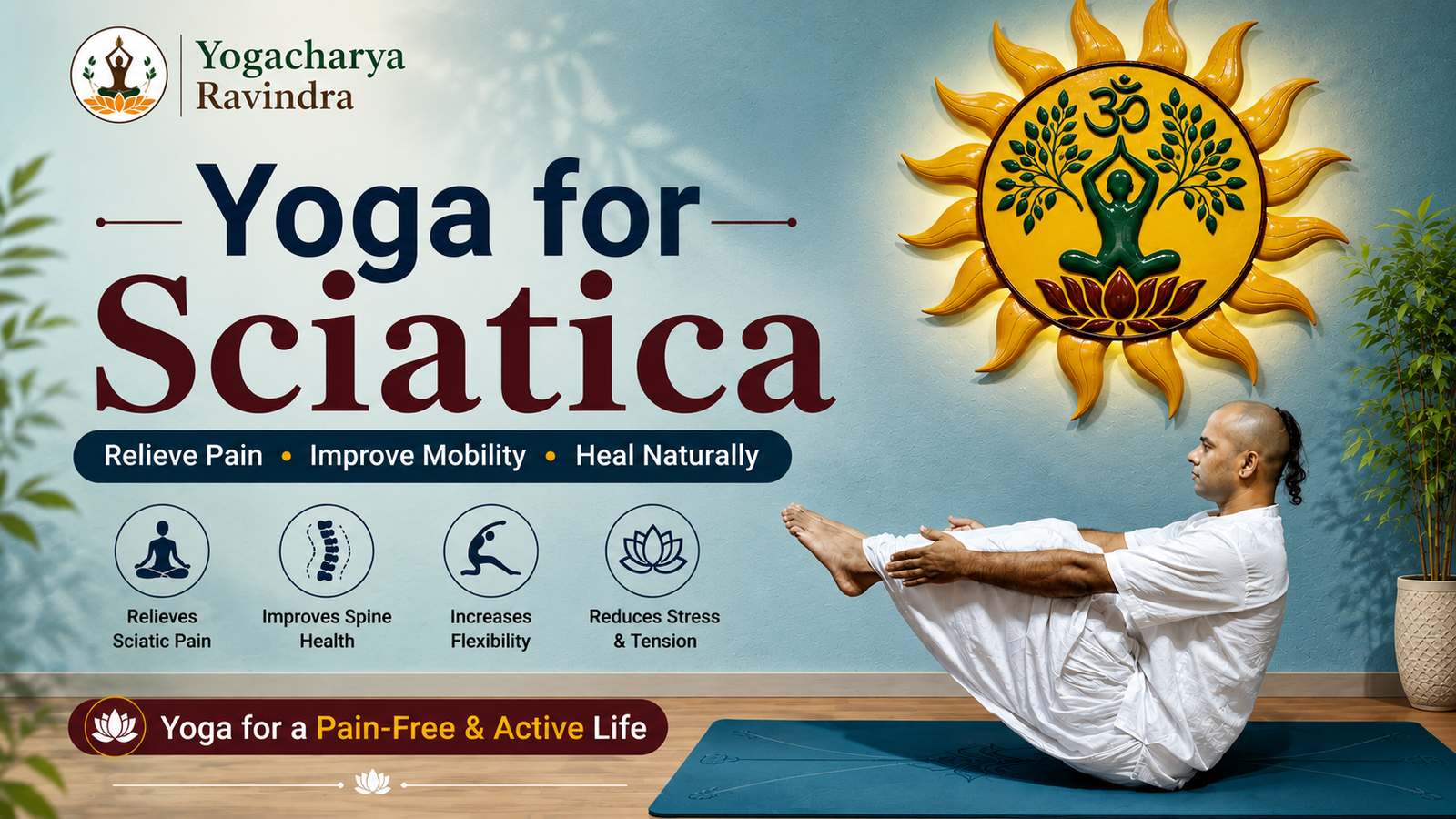
Sciatica is one of the most common conditions affecting the lower back and legs. Unlike general back pain, sciatica occurs when the sciatic nerve becomes irritated or compressed, causing pain that travels from the lower back through the hips, buttocks, and down one leg. The discomfort may range from a mild ache to a sharp, burning sensation that interferes with daily activities such as walking, sitting, sleeping, or even standing for long periods.
Many people rely on painkillers to manage symptoms, but these often provide only temporary relief. To achieve long-term improvement, it is essential to address the underlying causes, such as poor posture, muscle tightness, weak core muscles, and reduced spinal mobility. This is where Yoga for Sciatica becomes an effective and natural approach.
Yoga is much more than stretching. It combines mindful movement, controlled breathing, and muscle strengthening to improve posture, increase flexibility, and reduce pressure on the sciatic nerve. With regular practice, yoga helps the body move more efficiently, supports spinal alignment, and reduces muscle imbalances that often contribute to sciatica pain.
At Yogacharya Ravindra, we believe yoga should be therapeutic, personalized, and suitable for every age group. Our carefully designed yoga sessions focus on improving flexibility, strengthening the spine, and promoting overall wellness. Whether you are recovering from recurring sciatica or looking to prevent future flare-ups, practicing yoga under expert guidance can make a significant difference.
To learn more about our yoga programs, visit:
https://yogacharyaravinder.com/
You can also explore more expert yoga guides and wellness articles here:
https://yogacharyaravinder.com/blogs/
Understanding Sciatica
The sciatic nerve is the longest and widest nerve in the human body. It begins in the lower spine, passes through the hips and buttocks, and extends down each leg to the feet. Because of its length, irritation anywhere along its path can cause pain in multiple areas.
Sciatica itself is not a disease but a symptom of an underlying condition. The most common causes include:
- Herniated (slipped) disc
- Piriformis syndrome
- Degenerative disc disease
- Spinal stenosis
- Poor sitting posture
- Muscle tightness
- Sedentary lifestyle
- Pregnancy-related pressure on the sciatic nerve
People who spend long hours sitting, lift heavy objects incorrectly, or have weak core muscles are more likely to develop sciatica.
Common Symptoms of Sciatica
Recognizing the symptoms early can help you begin appropriate treatment before the condition worsens.
Common symptoms include:
- Pain radiating from the lower back to one leg
- Tingling or “pins and needles” sensation
- Burning pain in the hips or buttocks
- Numbness in the leg or foot
- Weakness while walking
- Pain that increases after sitting for long periods
- Difficulty bending or twisting comfortably
Symptoms may come and go, but recurring episodes often indicate that the underlying cause has not been addressed.
Why Is Yoga Effective for Sciatica Pain Relief?
Unlike high-impact workouts, yoga focuses on restoring balance throughout the body. The goal is not only to reduce pain but also to improve the way your body moves every day.
1. Yoga Reduces Pressure on the Sciatic Nerve
Tight muscles surrounding the hips and pelvis can compress the sciatic nerve. Gentle yoga stretches help create more space around these muscles, reducing pressure and allowing the nerve to move more freely.
Regular practice may also improve mobility in the hips and lower back, making everyday movements more comfortable.
2. Yoga Improves Spinal Alignment
Poor posture is one of the biggest contributors to sciatica. Sitting with rounded shoulders or standing with excessive lower back curvature places unnecessary stress on the spine.
Yoga teaches body awareness and proper alignment. Over time, maintaining better posture can reduce recurring irritation of the sciatic nerve.
3. Yoga Strengthens the Core
The abdominal muscles, lower back, and pelvic muscles work together to stabilize the spine. Weak core muscles force the lower back to work harder, increasing strain on surrounding tissues.
Yoga gradually strengthens these muscles without placing excessive pressure on the spine, making it an ideal exercise for many people with sciatica.
4. Yoga Improves Flexibility
Tight hamstrings, glutes, and hip flexors often contribute to sciatic nerve discomfort. Stretching these muscle groups through yoga improves mobility and reduces stiffness.
Better flexibility also lowers the risk of future injuries.
5. Yoga Helps Manage Stress
Pain and stress often create a cycle. Chronic pain increases stress levels, while stress causes muscles to tighten even more.
Yoga incorporates breathing exercises and mindfulness techniques that calm the nervous system and encourage muscle relaxation. This holistic approach makes yoga especially beneficial for people experiencing long-term pain.
Why Consistency Matters
One yoga session is unlikely to eliminate sciatica pain completely. Like any healthy habit, yoga works best when practiced consistently. Even 20–30 minutes a day, four to five times a week, can improve flexibility, posture, muscle strength, and overall spinal health over time.
Many practitioners notice better mobility within a few weeks, while long-term improvements often come from making yoga a regular part of their lifestyle.
Best Yoga Asanas for Sciatica Pain Relief
Practicing the right yoga poses can help relieve muscle tension, improve flexibility, and strengthen the muscles that support the spine. Remember to move slowly, breathe deeply, and stop immediately if any pose causes sharp or radiating pain.
1. Child’s Pose (Balasana)
Child’s Pose is one of the most relaxing yoga asanas for people experiencing sciatica. It gently stretches the lower back, hips, and thighs while allowing the spine to decompress.
Benefits
- Relieves lower back tension
- Gently stretches the hips
- Improves spinal mobility
- Promotes deep relaxation
How to Perform
- Kneel on the yoga mat and sit back on your heels.
- Extend your arms forward.
- Lower your forehead to the floor.
- Take slow, deep breaths and hold the pose for 30–60 seconds.
2. Cat-Cow Pose (Marjaryasana-Bitilasana)
This gentle flowing movement improves spinal flexibility and reduces stiffness. It also helps increase circulation around the spine.
Benefits
- Improves spinal mobility
- Reduces stiffness in the lower back
- Encourages better posture
- Gently activates the core muscles
How to Perform
- Begin on your hands and knees.
- Inhale while lifting your chest and tailbone (Cow Pose).
- Exhale while rounding your back and tucking your chin (Cat Pose).
- Repeat for 8–10 slow breaths.
3. Reclining Figure Four Stretch
Tight glute and piriformis muscles often contribute to sciatic nerve compression. This stretch targets those muscles safely.
Benefits
- Opens tight hips
- Relieves pressure around the sciatic nerve
- Improves flexibility
- Reduces muscle tightness
How to Perform
- Lie on your back with your knees bent.
- Cross one ankle over the opposite knee.
- Gently pull the supporting leg toward your chest.
- Hold for 20–30 seconds before switching sides.
4. Bridge Pose (Setu Bandhasana)
Bridge Pose strengthens the glutes, lower back, and core muscles, all of which play an important role in supporting the spine.
Benefits
- Strengthens the lower back
- Improves pelvic stability
- Activates the core
- Encourages better posture
How to Perform
- Lie on your back with your knees bent.
- Keep your feet hip-width apart.
- Press through your feet and slowly lift your hips.
- Hold for 15–20 seconds before lowering.
5. Legs-Up-the-Wall Pose (Viparita Karani)
This restorative pose is excellent after a long day of sitting or standing. It helps reduce fatigue while encouraging relaxation.
Benefits
- Relaxes tired legs
- Improves circulation
- Reduces stress
- Promotes gentle recovery
How to Perform
- Sit close to a wall.
- Lie on your back while extending your legs up the wall.
- Relax your arms by your sides.
- Stay in the pose for 5–10 minutes while breathing slowly.
Breathing Techniques That Support Sciatica Recovery
Breathing exercises are often overlooked, but they can make a significant difference in pain management. Proper breathing helps relax tight muscles, improves oxygen flow, and reduces stress.
Diaphragmatic Breathing
Breathe deeply into your abdomen rather than your chest. This encourages relaxation and reduces unnecessary muscle tension around the lower back.
Alternate Nostril Breathing (Nadi Shodhana)
This traditional pranayama technique helps calm the nervous system and improve mental focus. Practicing it for five minutes daily can help reduce stress-related muscle tightness.
Deep Belly Breathing
Spend a few minutes each morning taking slow, controlled breaths. Pairing deep breathing with gentle stretches can prepare your body for the day ahead.
Daily Habits That Complement Yoga for Sciatica
Yoga delivers the best results when combined with healthy daily habits. Small changes in your routine can reduce stress on the sciatic nerve and support long-term recovery.
- Avoid sitting continuously for more than 30–45 minutes.
- Use a chair that supports your lower back.
- Lift heavy objects using your legs instead of your back.
- Sleep on a supportive mattress.
- Stay hydrated throughout the day.
- Walk for 15–20 minutes daily if your doctor approves.
- Maintain a healthy body weight to reduce pressure on the spine.
These habits work alongside Yoga for Sciatica to improve mobility and lower the chances of recurring pain.
Common Mistakes to Avoid
Many people unknowingly delay recovery by making simple mistakes during their yoga practice.
- Forcing deep stretches before the body is ready.
- Holding poses despite sharp or radiating pain.
- Practicing advanced yoga without proper guidance.
- Ignoring posture during daily activities.
- Skipping warm-up exercises.
- Being inconsistent with practice.
Yoga should never increase your pain. Gentle, mindful movement is always more beneficial than pushing your body beyond its limits.
Why Choose Yogacharya Ravindra?
Recovering from sciatica requires patience, proper guidance, and a personalized approach. At Yogacharya Ravindra, we focus on therapeutic yoga that supports spinal health while respecting each individual’s comfort level.
Our programs are designed to:
- Improve flexibility safely.
- Strengthen the core and lower back.
- Correct posture.
- Reduce stress through breathing techniques.
- Build long-term mobility and confidence.
Whether you’re joining online or in person, our goal is to help you practice yoga safely and effectively.
Learn more about our programs and you can also explore more expert wellness content here:
https://yogacharyaravinder.com/blogs/
Frequently Asked Questions
1. Is yoga good for sciatica every day?
Yes, gentle yoga can be practiced daily if it does not increase your pain. Start with short sessions and focus on slow, controlled movements rather than intense stretches.
2. Which yoga pose is best for sciatica pain?
Some of the most beneficial poses include Child’s Pose, Cat-Cow Stretch, Bridge Pose, Reclining Pigeon Pose, and Legs Up the Wall. The best pose depends on the cause and severity of your sciatica.
3. Can yoga make sciatica worse?
Yes. Incorrect technique, advanced poses, or overstretching can aggravate the sciatic nerve. Always stop if you experience sharp or radiating pain and seek guidance from a qualified instructor.
4. How long does it take for yoga to relieve sciatica?
Many people notice improvements within a few weeks of regular, gentle practice. The timeline varies depending on the underlying cause, consistency, and overall health.
5. Can beginners with sciatica practice yoga?
Absolutely. Beginners can benefit from beginner-friendly and modified yoga routines designed specifically for sciatica. It’s best to learn under professional supervision to ensure safety and proper alignment.