In today’s busy lifestyle, staying focused can be challenging. Constant notifications, social media, long screen hours, work pressure, academic stress, and poor sleep can make it difficult to concentrate on important tasks. Whether you are a student preparing for exams, a professional managing multiple responsibilities, or someone looking to improve mental clarity, yoga can become a valuable part of your daily wellness routine.
Yoga for concentration combines physical postures, breathing exercises, mindfulness, and relaxation techniques to encourage a calmer and more focused state of mind. With regular practice, yoga may help you become more aware of your thoughts, breathing, body, and surroundings.
Yoga should not be considered an instant solution for concentration problems. Instead, it can be used as a supportive practice alongside healthy sleep, regular exercise, balanced nutrition, and effective study or work habits.
What Is Yoga for Concentration?
Yoga for concentration refers to yoga practices that encourage mental steadiness, mindful awareness, controlled breathing, and better body-mind coordination.
Unlike a workout that focuses mainly on physical movement, concentration-focused yoga encourages you to pay attention to your breathing, posture, movements, and thoughts. This can help you develop the habit of bringing your attention back whenever your mind becomes distracted.
Practicing yoga regularly may be especially useful for people who experience mental fatigue, everyday stress, digital distractions, or difficulty maintaining attention for extended periods.
The goal is not to completely stop your thoughts. Instead, yoga teaches you to notice distractions and gently bring your attention back to the present moment.
How Can Yoga Help Improve Concentration?
There are several ways yoga may support focus and concentration.
1. Encourages Mindfulness
Many yoga practices require you to pay attention to your breathing and body movements. This naturally encourages mindfulness.
When you practice mindfulness, you become more aware of what you are doing instead of allowing your mind to constantly move between different thoughts.
With consistent practice, this awareness can become useful during studying, working, reading, or performing other daily activities.
2. Helps Manage Everyday Stress
Stress can make it harder to concentrate. When your mind is occupied with worries and responsibilities, focusing on one task can become difficult.
Yoga combines movement, breathing, and relaxation, which can help create a calmer mental environment.
A relaxed mind may find it easier to focus on a specific activity without becoming overwhelmed by unnecessary thoughts.
3. Connects Breathing With Awareness
Breathing is an important part of yoga. During yoga and pranayama, you learn to observe and control your breathing.
When your attention moves toward your breath, it can provide an anchor for your mind. Whenever you notice that your thoughts have wandered, you can gently return your attention to your breathing.
This simple process can become a useful concentration practice.
4. Improves Mind-Body Awareness
Yoga requires awareness of posture, balance, movement, and breathing.
For example, when performing a balancing pose, you need to pay attention to your body position and maintain a steady gaze. This can encourage greater awareness and mental involvement during the practice.
Best Yoga Poses for Concentration
You do not need an advanced yoga routine to work on concentration. Several simple poses can be included in a beginner-friendly practice.
1. Vrikshasana (Tree Pose)
Vrikshasana is one of the most useful yoga poses to include in a concentration-focused routine.
Because it is a balancing pose, you need to maintain awareness of your body and focus your gaze on a fixed point.
Stand upright and shift your weight onto one leg. Place the other foot comfortably against the inner leg, avoiding direct pressure on the knee. Bring your hands together in front of your chest or raise them overhead.
Maintain a steady gaze and breathe comfortably.
Practice on both sides according to your ability.
2. Sukhasana (Easy Pose)
Sukhasana is a simple seated position that can be used for breathing exercises and meditation.
Sit comfortably with your legs crossed and keep your spine upright. Relax your shoulders and place your hands comfortably on your thighs.
Close your eyes if you feel comfortable and observe your natural breathing.
Whenever your mind becomes distracted, gently bring your attention back to your breath.
This makes Sukhasana particularly useful for developing mindful awareness.
3. Padmasana (Lotus Pose)
Padmasana is traditionally used for meditation and breathing practices.
The stable seated position can encourage stillness and provide a suitable posture for concentration exercises.
However, Padmasana requires adequate hip and knee flexibility. Beginners should never force their legs into the position.
If Lotus Pose is uncomfortable, choose Sukhasana or another comfortable seated posture instead.
4. Tadasana (Mountain Pose)
Tadasana may look simple, but it encourages awareness of posture and body alignment.
Stand comfortably with your feet grounded. Lengthen your spine, relax your shoulders, and keep your head aligned with your body.
Take slow, comfortable breaths while paying attention to your posture.
This pose can also be used as a short mindful break during a busy day.
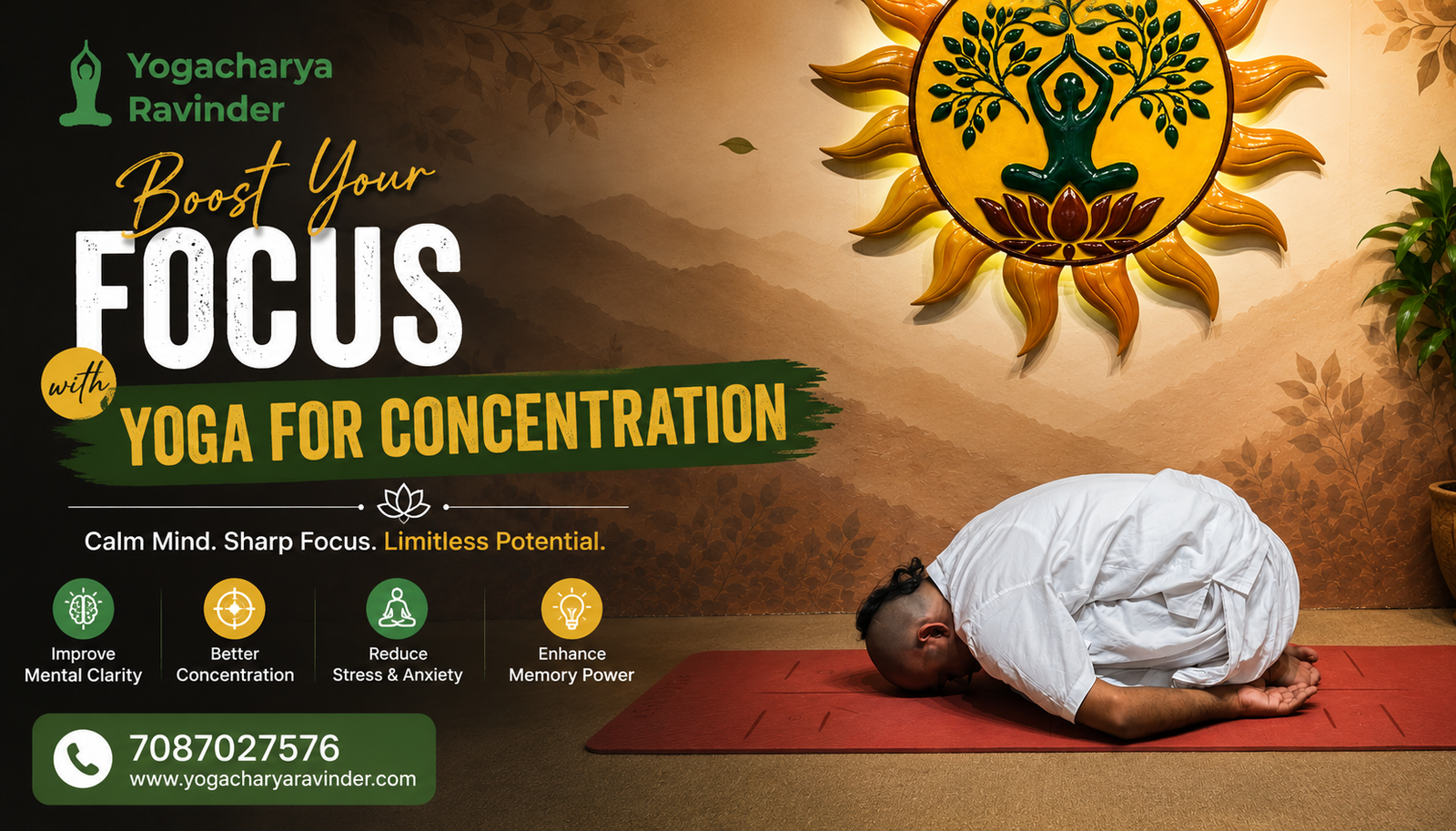
5. Balasana (Child’s Pose)
Balasana is a gentle resting posture that can be included in a relaxing yoga sequence.
Start by kneeling and gradually bring your upper body forward while keeping the position comfortable. Allow your body to relax and focus on slow breathing.
This pose can be particularly useful after more active movements when you want to transition into a calmer state.
6. Vajrasana (Thunderbolt Pose)
Vajrasana is a seated posture that can be used for breathing and meditation practices.
Sit comfortably on your heels with your spine upright and shoulders relaxed.
Focus on your breathing and maintain awareness of your posture.
If you experience discomfort in your knees or ankles, modify the position or choose a more comfortable seated posture.
Best Pranayama for Concentration
Breathing exercises can complement physical yoga poses and meditation.
Nadi Shodhana Pranayama
Nadi Shodhana, commonly known as alternate nostril breathing, is a traditional breathing practice. It involves breathing through alternate nostrils in a controlled and comfortable manner.
The practice encourages awareness of breathing and can be incorporated into a concentration-focused routine. Beginners should avoid forcing the breath or holding it for long periods. Learning the technique from a qualified yoga instructor can help ensure proper practice.
Bhramari Pranayama
Bhramari Pranayama is also known as humming-bee breathing. It involves making a gentle humming sound while exhaling. The practice can be included in a relaxation routine and may help you transition from a busy, distracted state toward a calmer state of mind. Practice gently without creating excessive pressure or discomfort.
Yoga and Meditation for Better Concentration
Yoga and meditation can complement each other. Physical yoga poses help develop body awareness, balance, and controlled movement, while meditation provides a direct opportunity to practice sustained attention.
After completing a short yoga session, sit comfortably for a few minutes and focus on your breathing.Your mind may wander. This is completely normal. Instead of becoming frustrated, simply notice the distraction and bring your attention back to your breath. Repeating this process helps you practice returning your attention to a chosen point.
Yoga for Students and Concentration
Students often have to deal with long study sessions, exams, academic pressure, social media, and digital distractions. A short yoga practice can be used before studying to create a calm transition between everyday activities and focused study.
Students can include:
- Sukhasana
- Tadasana
- Vrikshasana
- Vajrasana
- Gentle breathing exercises
- Short meditation
A 10–15 minute practice can be enough to establish a healthy routine.
However, yoga should complement good study habits rather than replace them. Adequate sleep, regular breaks, healthy meals, hydration, and a structured study schedule are also important for maintaining concentration.
Yoga for Working Professionals
Working professionals may experience concentration difficulties due to long working hours, meetings, multitasking, deadlines, and continuous screen exposure. You do not need to perform a complete yoga class during your working day.
Instead, take a few minutes to pause, sit upright, relax your shoulders, and practice slow breathing. You can also include simple stretches between tasks. A short mindful break may help you mentally reset before moving on to the next task.
Try This 5-Minute Focus Break
- Sit comfortably with your spine upright.
- Relax your shoulders.
- Take slow and comfortable breaths.
- Close your eyes for a moment if appropriate.
- Focus on each inhale and exhale.
- Return your attention to your breathing whenever your mind wanders.
This simple practice can be done at home or during a suitable break at work.
Morning Yoga for Concentration
Morning can be a convenient time to practice yoga for concentration because it allows you to begin your day with movement, breathing, and mindfulness.
A simple morning sequence can include:
- Tadasana
- Vrikshasana
- Gentle Sun Salutations
- Sukhasana
- Nadi Shodhana
- Short meditation
The purpose is not to make the routine extremely intense. Instead, aim to finish your practice feeling calm, refreshed, and ready to begin your day.
Evening Yoga for Mental Clarity
Concentration is not only about being productive during the day. Relaxing your mind in the evening can also support a healthier daily routine. Gentle yoga, breathing exercises, and meditation can help you transition away from work or study.
An evening routine may include:
- Balasana
- Sukhasana
- Gentle seated stretches
- Bhramari Pranayama
- Meditation
Avoid forcing difficult poses when you are tired. The goal of an evening routine should be relaxation and mindful awareness.
A Simple 15-Minute Yoga Routine for Concentration
If you are new to yoga, start with a short and manageable routine.
Step 1: Sukhasana – 2 Minutes
Sit comfortably and focus on your natural breathing.
Step 2: Tadasana – 2 Minutes
Stand upright and bring your awareness to your posture and breath.
Step 3: Vrikshasana – 2 Minutes
Practice Tree Pose on both sides while maintaining a steady gaze.
Step 4: Gentle Stretching – 2 Minutes
Perform comfortable stretches while coordinating your movements with your breathing.
Step 5: Nadi Shodhana – 3 Minutes
Practice gentle alternate nostril breathing without forcing the breath.
Step 6: Meditation – 4 Minutes
Sit quietly and focus on your breathing. Whenever your attention wanders, gently return it to your breath. This creates a simple 15-minute routine combining movement, balance, breathing, and mindfulness.
How Often Should You Practice Yoga for Concentration?
Consistency is more important than doing an extremely long yoga session occasionally. Beginners can start with 10–15 minutes a day and gradually increase the duration according to their comfort and schedule. You can also practice a shorter routine during busy days. The key is to make yoga a regular part of your lifestyle.
Along with yoga, consider maintaining habits that support concentration:
- Get adequate sleep.
- Drink enough water.
- Eat balanced meals.
- Take regular screen breaks.
- Reduce unnecessary notifications.
- Avoid excessive multitasking.
- Include physical activity in your routine.
- Take short mindful breaks during work or study.
Can Yoga Improve Concentration Immediately?
You may feel calmer and more refreshed after a yoga session, but you should not expect an immediate or guaranteed improvement in concentration. The experience can differ from person to person.
Yoga is best viewed as a regular wellness practice that may support mindfulness, stress management, and mental clarity over time. Instead of focusing on immediate results, focus on building a consistent routine.
Yoga for Focus and Mental Clarity
Focus and mental clarity are closely connected.
When your mind is constantly switching between tasks, notifications, worries, and distractions, it can become difficult to give your full attention to one activity.
Yoga encourages you to slow down and become aware of your present experience.
For example, when practicing Vrikshasana, you focus on your balance and gaze. During pranayama, you focus on your breathing. During meditation, you focus on a chosen point of attention. These practices can help you become more comfortable with directing your attention.
Common Mistakes to Avoid
When practicing yoga for concentration, avoid making the routine unnecessarily complicated.
Practicing Too Intensely
Concentration-focused yoga does not need to be physically exhausting. Choose comfortable poses and prioritize awareness over intensity.
Expecting Instant Results
One yoga session is unlikely to transform your concentration immediately. Consistency matters more than quick results.
Ignoring Breathing
If you only focus on completing yoga poses, you may miss an important part of the practice. Try to coordinate movement with comfortable breathing.
Forcing Difficult Poses
Advanced poses are not necessary for improving focus. Always choose a variation that matches your current flexibility and experience.
Practicing Without Consistency
Practicing for one hour once a week may be less practical than developing a manageable daily routine. Start small and build a sustainable habit.
Precautions While Practicing Yoga
Yoga can be suitable for many people when practiced correctly, but beginners should avoid forcing their bodies into difficult positions.
Keep these precautions in mind:
- Practice on a stable surface.
- Wear comfortable clothing.
- Move slowly and mindfully.
- Do not force stretches.
- Avoid holding your breath unnecessarily.
- Modify poses according to your ability.
- Stop if you experience significant pain, dizziness, or unusual discomfort.
- Learn advanced yoga and pranayama techniques from a qualified instructor.
If concentration difficulties are persistent, severe, or interfering with your everyday life, consider speaking with an appropriate healthcare professional instead of relying only on yoga.
Explore More Yoga Resources
If you want to explore more helpful yoga practices, wellness tips, and expert-guided routines, visit our Yogacharya Ravinder. Discover practical information on different yoga poses, meditation, breathing exercises, weight management, stress relief, better sleep, and overall well-being. These resources can help you build a more consistent and mindful yoga practice.
Conclusion
Yoga for concentration can be a valuable addition to your daily wellness routine if you want to develop better focus, mindfulness, and mental clarity. Yoga combines physical movement, breathing, balance, and awareness, giving you an opportunity to step away from distractions and reconnect with the present moment.
Simple practices such as Vrikshasana, Sukhasana, Tadasana, Vajrasana, Nadi Shodhana, and meditation can be incorporated into a beginner-friendly routine. You do not need to start with a long session. Even 10–15 minutes of consistent practice can help you establish a sustainable habit.
For the best results, combine yoga with adequate sleep, balanced nutrition, regular physical activity, screen breaks, and healthy study or work habits.
The goal is not to force your mind to stop thinking. Instead, learn to notice distractions and gently bring your attention back to the task at hand.
With patience and consistency, yoga can become a practical part of a lifestyle focused on greater calm, awareness, and concentration.
Frequently Asked Questions
1. Is yoga good for concentration?
Yes, yoga can be a useful supportive practice for concentration. It combines movement, breathing, mindfulness, and body awareness, which may help create a calmer and more focused state of mind.
2. Which yoga is best for concentration?
Vrikshasana, Sukhasana, Tadasana, Vajrasana, breathing exercises, and meditation can all be included in a concentration-focused yoga routine. The best practice is one that you can perform comfortably and consistently.
3. Can yoga improve concentration for students?
Yoga can be included as part of a healthy routine for students. A short session involving simple poses, breathing exercises, and meditation may help students develop mindfulness and create a focused environment for studying.
4. How long should I practice yoga for concentration?
Beginners can start with around 10–15 minutes per day. You can gradually increase the duration as you become more comfortable. Regular practice is more important than doing occasional long sessions.
5. Does pranayama help with concentration?
Pranayama can be a useful part of a concentration-focused routine because it encourages awareness of breathing and helps create a more mindful practice. Nadi Shodhana and Bhramari can be included gently and preferably learned under proper guidance.