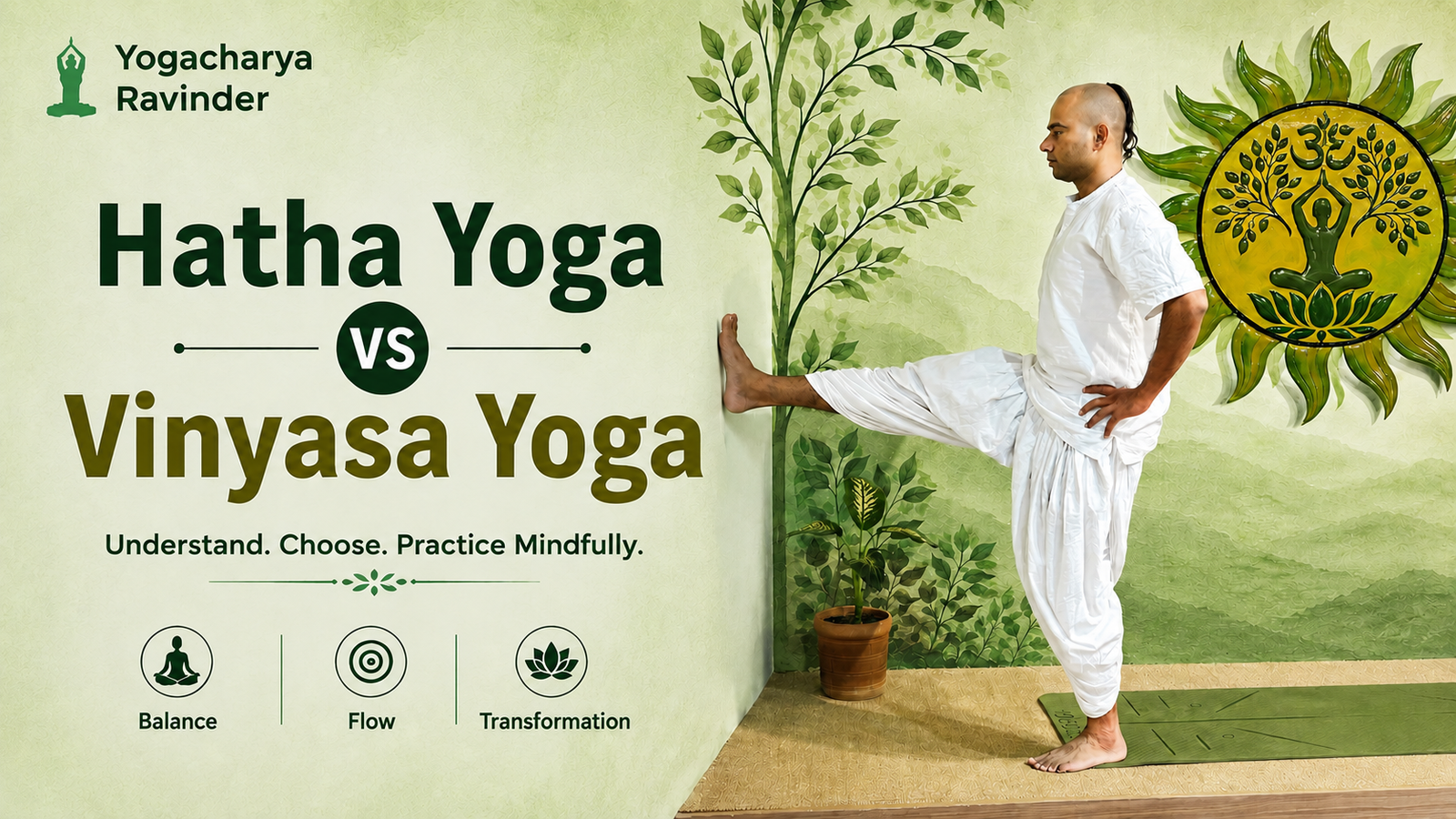
If you’ve started researching yoga styles, you’ve probably run into two names again and again: Hatha and Vinyasa. Both are rooted in the same ancient tradition, both use similar asanas (poses), and both promise better flexibility, strength, and calm so why do people debate Hatha Yoga vs Vinyasa Yoga so much?
The truth is, the poses aren’t really what separates them. It’s the pace, breath pattern, and intensity that make these two styles feel completely different in practice. One is slow, grounding, and meditative. The other is fast, flowing, and physically demanding. Picking the wrong one for your body or goals is one of the biggest reasons beginners quit yoga within the first few weeks.
In this guide, we’ll break down exactly what separates Hatha Yoga vs Vinyasa Yoga, who each style is best suited for, and how to decide which one fits your current fitness level, health conditions, and weight loss or wellness goals.
What Is Hatha Yoga?
Hatha Yoga is the traditional, foundational form of yoga that most other styles, including Vinyasa, evolved from. The word “Hatha” combines “Ha” (sun) and “Tha” (moon), symbolizing the balance of opposing energies in the body. Understanding this style is the first step in the Hatha Yoga vs Vinyasa Yoga comparison, since Vinyasa itself grew out of Hatha’s core poses and philosophy.
In a typical Hatha class, you’ll hold each pose for several breaths sometimes 30 seconds to a couple of minutes before transitioning slowly to the next one. There’s no rush. The focus is on proper alignment, steady breathing, and building a mind-body connection rather than moving quickly through a sequence.
Key characteristics of Hatha Yoga:
- Slow, deliberate pace with static poses
- Longer holds that build strength and flexibility gradually
- Strong emphasis on breath control (pranayama) and alignment
- Includes meditation and relaxation techniques
- Lower cardiovascular intensity compared to flow-based styles
- Beginner-friendly and easy to modify for injuries or stiffness
Hatha is often the starting point recommended for people who are completely new to yoga, recovering from an injury, managing chronic pain, or simply looking for a calmer, more introspective practice.
What Is Vinyasa Yoga?
Vinyasa Yoga, sometimes called “flow yoga,” links movement with breath in a continuous, dynamic sequence. Instead of holding a pose for an extended period, you move from one asana to the next in rhythm with your inhale and exhale creating a flowing, almost dance-like sequence.
Vinyasa doesn’t follow one fixed set of poses; each class can be different depending on the instructor, which keeps the practice varied and engaging. Because the transitions are continuous, your heart rate stays elevated throughout the session, making it feel closer to a moderate cardio workout than a slow stretch session.
Key characteristics of Vinyasa Yoga:
- Fast-paced, continuous movement synced with breath
- Builds cardiovascular endurance along with strength
- Higher calorie burn compared to Hatha
- Sequences vary class to class less repetitive
- Improves coordination, stamina, and muscular endurance
- Better suited for people with some yoga experience or a base fitness level
Hatha Yoga vs Vinyasa Yoga: Side-by-Side Comparison
| Factor | Hatha Yoga | Vinyasa Yoga |
| Pace | Slow, static holds | Fast, continuous flow |
| Breathing | Deep, controlled pranayama | Breath-synced movement |
| Intensity | Low to moderate | Moderate to high |
| Calorie Burn | Lower | Higher |
| Best For | Beginners, injury recovery, stress relief | Weight loss, stamina building, experienced practitioners |
| Class Structure | Predictable, repeatable | Varies every session |
| Mental Focus | Meditative, grounding | Energizing, dynamic |
| Physical Demand | Gentle on joints | More demanding on joints and muscles |
Which One Burns More Fat: Hatha or Vinyasa?
This is usually the first question anyone asks once they understand the basics and it makes sense, since weight management is one of the biggest reasons people start yoga in the first place.
Because Vinyasa keeps your heart rate elevated through continuous movement, it generally burns more calories per session than Hatha. A 60-minute Vinyasa class can burn noticeably more calories than a Hatha class of the same length, simply because there’s no resting between poses.
That said, Hatha shouldn’t be dismissed for weight loss. Its slower pace builds a strong foundation of strength, flexibility, and body awareness all of which make it easier to sustain a more intense practice like Vinyasa (or Power Yoga) later on without injury. Many students actually get better long-term fat-loss results by starting with Hatha to build discipline and body control, then progressing to Vinyasa once their stamina improves.
Which Style Is Right for You?
Choosing between Hatha Yoga vs Vinyasa Yoga really comes down to your current fitness level, health conditions, and personal goals. Here’s a simple way to decide:
Choose Hatha Yoga if you:
- Are completely new to yoga or exercise in general
- Deal with joint pain, stiffness, back pain, or are recovering from an injury
- Want to reduce stress, anxiety, or improve sleep quality
- Prefer a slower, mindful practice over an intense workout
- Are managing a health condition like high blood pressure, diabetes, or thyroid issues
Choose Vinyasa Yoga if you:
- Already have some yoga or fitness experience
- Want a higher-intensity workout that also builds flexibility
- Are focused on weight loss and calorie burn
- Enjoy variety and don’t want a repetitive routine
- Have good joint health and no major mobility restrictions
Can You Practice Both?
Absolutely and many experienced practitioners do exactly this. A common approach is starting the week with a couple of Hatha sessions to work on flexibility, alignment, and breath control, then adding Vinyasa sessions for cardiovascular intensity and calorie burn. This combination gives you the best of both worlds: the grounding, therapeutic benefits of Hatha and the fat-burning, stamina-building benefits of Vinyasa.
If you’re just starting out, though, it’s generally best not to jump straight into Vinyasa. Building a foundation with Hatha first helps you learn correct alignment, which significantly reduces the risk of injury once you move to faster-paced sequences.
Why Guided, Live Classes Matter More Than the Style You Pick
Regardless of which style you choose, the biggest factor in actually seeing results isn’t Hatha vs Vinyasa it’s consistency and correct form. Following random YouTube videos without personalized feedback often leads to poor alignment, plateaued progress, or even injury, especially for beginners.
This is exactly why structured, live-guided programs work better than self-paced videos. In live sessions, an instructor can correct your posture in real time, adjust the intensity based on your fitness level, and help you progress safely from Hatha-style foundational work into more dynamic Vinyasa or Power Yoga sequences as your body gets ready for it.
At Yogacharya Ravinder’s online classes, sessions are structured around exactly this kind of progression combining traditional Hatha and Vinyasa principles with beginner-friendly pacing, so you build strength and flexibility safely before increasing intensity for weight loss and transformation goals.
Ready to find out which style suits you best? Join a live class with Yogacharya Ravinder and get a personalized recommendation based on your body and goals.
Conclusion
When it comes to Hatha Yoga vs Vinyasa Yoga, there’s no single “better” style only what’s better for you right now. Hatha offers a slower, more therapeutic approach ideal for beginners, injury recovery, and stress relief, while Vinyasa delivers a faster, more calorie-intensive flow suited for building stamina and accelerating weight loss.
For more practical yoga guidance like this, feel free to browse our complete blog library.
The smartest approach for most people is to start with Hatha to build a strong foundation, then gradually incorporate Vinyasa as strength and confidence grow. And whichever style you choose, practicing under live, personalized guidance will always get you safer and faster results than practicing alone.
Frequently Asked Questions
1. Is Hatha Yoga or Vinyasa Yoga better for beginners?
Hatha Yoga is generally better for beginners because of its slower pace and longer pose holds, which make it easier to learn correct alignment and breathing technique before attempting faster-paced sequences.
2. Which is better for weight loss, Hatha or Vinyasa?
Vinyasa typically burns more calories per session due to its continuous movement and elevated heart rate, making it more effective for weight loss. However, Hatha builds the strength and body control needed to sustain a Vinyasa practice long-term.
3. Can I switch from Hatha to Vinyasa yoga?
Yes. Many practitioners start with Hatha to build a solid foundation in alignment and breathing, then transition to Vinyasa once they’re comfortable with basic poses and have improved their stamina and flexibility.
4. Is Vinyasa yoga harder than Hatha yoga?
Generally, yes. Vinyasa is more physically demanding because it involves continuous movement synced with breath, keeping the heart rate elevated throughout the class, whereas Hatha involves static holds at a slower, more manageable pace.
5. Which style is better for stress relief, Hatha or Vinyasa?
Hatha Yoga is usually more effective for stress relief because its slow, meditative pace and focus on deep breathing help calm the nervous system. Vinyasa can also relieve stress, but its higher intensity makes it feel more like an energizing workout than a relaxing practice.