A good night’s sleep is essential for physical recovery, mental clarity, energy, and overall well-being. Yet, stress, an irregular routine, excessive screen time, physical tension, and an overactive mind can make it difficult to relax at night.
This is where yoga for better sleep can become a valuable part of a healthy bedtime routine. Unlike intense workouts, gentle evening yoga focuses on controlled movement, breathing, relaxation, and body awareness. These practices may help you transition from a busy day into a calmer state before bedtime.
Research suggests that yoga may improve sleep quality in several groups, although the evidence is not strong enough to consider yoga a guaranteed treatment for insomnia. If your goal is to sleep better naturally, incorporating a few gentle yoga poses and breathing exercises into your evening routine may be a practical place to start.
What Is Yoga for Better Sleep?
Yoga for better sleep refers to gentle yoga practices designed to encourage relaxation and prepare the body and mind for rest.
A bedtime yoga routine does not need to be physically demanding. Instead, it can include:
- Gentle stretching
- Relaxed breathing
- Slow yoga movements
- Restorative poses
- Mindful relaxation
- Meditation or Yoga Nidra
The objective is to create a peaceful transition between your daily activities and bedtime. A consistent routine may also help you develop healthier sleep habits because you begin associating certain relaxing movements and breathing practices with winding down for the night.
Can Yoga Help You Sleep Better?
Yoga may help improve sleep quality for some people. Research reviewed by the National Center for Complementary and Integrative Health suggests that yoga may improve sleep quality, although evidence specifically for treating insomnia is less conclusive.
A systematic review and meta-analysis of 19 studies involving 1,832 women with sleep problems found that yoga was associated with improvements in sleep quality compared with control conditions. However, the researchers did not find clear evidence that yoga reduced insomnia severity in every group.
This means yoga is best viewed as a supportive wellness practice, rather than a replacement for professional treatment when someone has persistent insomnia or another sleep disorder.
How Yoga for Better Sleep May Help
1. Encourages Relaxation
One of the biggest reasons people struggle to sleep is difficulty switching off after a busy day. Gentle yoga encourages slower movement and conscious breathing. Spending even 10–20 minutes moving mindfully can create a calming transition before bedtime.
Instead of immediately moving from work, social media, television, or household activities into bed, you can use yoga as a buffer that allows your body and mind to gradually slow down.
2. Helps Reduce Everyday Stress
Stress and poor sleep often influence each other. A stressful day can make it difficult to relax at night, while inadequate sleep can make the following day feel more difficult.
Yoga combines movement, breathing, and mindfulness, which may help with stress management. Research reviewed by NCCIH has found beneficial effects of yoga on measures of perceived stress in several studies. A calmer evening routine may therefore make it easier to prepare mentally for sleep.
3. Releases Physical Tension
Sitting for long hours, working at a desk, exercising, or spending much of the day in one position can create tension in the neck, shoulders, hips, and back.
Gentle stretching before bed may help you become more aware of areas where you are holding tension. The goal is not to perform deep stretches. Instead, move slowly and stay within a comfortable range.
4. Creates a Consistent Bedtime Routine
Sleep quality is influenced by daily habits, not just what you do immediately before bed. Practicing yoga at approximately the same time each evening can help create a predictable wind-down routine. Over time, this routine can become a signal that the active part of your day is ending. Consistency is more important than performing a long or complicated session.
A Gentle Nighttime Yoga Approach for Better Sleep
When practicing yoga for better sleep, the goal is not to complete a difficult yoga workout before going to bed. Instead, create a gradual transition from an active day to a relaxed evening.
Start by reducing the pace of your movements. Spend a few minutes sitting comfortably and taking slow, natural breaths. Then introduce gentle movements that release tension from areas that may feel tight after a long day, such as the shoulders, hips, back, and legs.
As you continue, gradually reduce the amount of movement and spend more time focusing on relaxed breathing. You can finish your practice with a comfortable resting position or a short mindfulness session.
This approach is different from a regular fitness-focused yoga session because the purpose is relaxation rather than intensity. You should finish the practice feeling calm and comfortable rather than energized or physically exhausted.
Create a 10–15 Minute Wind-Down Routine
A simple nighttime sequence can follow this pattern:
First 2–3 minutes: Sit comfortably and focus on slow, relaxed breathing.
Next 4–5 minutes: Perform gentle full-body movements to release everyday stiffness and tension.
Next 2–3 minutes: Reduce movement and focus more closely on your breathing.
Final 3–4 minutes: Lie down comfortably, close your eyes, and allow your body to become still.
You can repeat this routine regularly and adjust the duration according to your comfort. The aim is to create a familiar signal that tells your body and mind that it is time to slow down.
Make Your Environment Part of the Practice
Your surroundings can also influence how relaxing your bedtime routine feels. Keep the room comfortable, reduce unnecessary distractions, and avoid turning your yoga session into another task that you need to complete quickly.
You can practice with soft lighting and minimal distractions. If you use your phone for a guided yoga or breathing session, finish using it once the practice is complete rather than continuing to browse or scroll.
Over time, combining gentle movement with a consistent nighttime environment can make your yoga for better sleep routine easier to maintain.
Breathing Exercises for Better Sleep
Breathing exercises can complement gentle yoga before bedtime.
Slow Deep Breathing
Sit or lie comfortably and breathe slowly through your nose. Allow your abdomen to expand naturally as you inhale and soften as you exhale.
Do not force your breath or try to hold it for an uncomfortable amount of time. Continue for a few minutes while keeping your attention on the natural rhythm of your breathing.
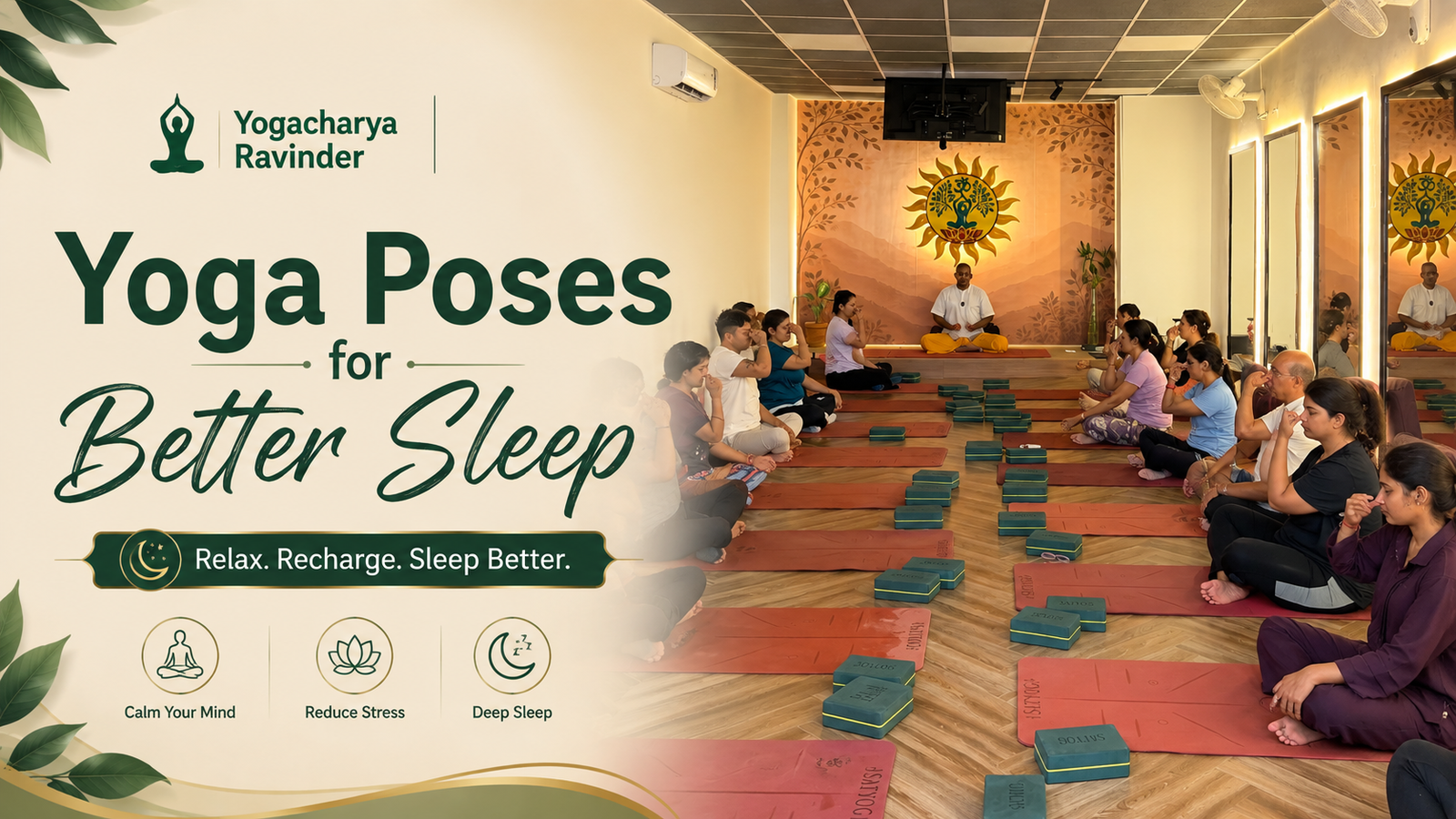
Alternate Nostril Breathing
Nadi Shodhana, or alternate nostril breathing, is another traditional breathing practice that can be incorporated into a calming routine.
Practice gently and without straining. If you feel dizzy or uncomfortable, stop and return to normal breathing. For beginners, learning pranayama under the guidance of a qualified yoga instructor can be helpful.
A Simple 15-Minute Yoga Routine for Better Sleep
You don’t need a long session to create a relaxing bedtime routine.
Try this beginner-friendly sequence:
2 minutes – Slow breathing
Sit or lie comfortably and focus on relaxed breathing.
2 minutes – Cat-Cow
Move slowly with your breath.
2 minutes – Child’s Pose
Stay relaxed and breathe naturally.
3 minutes – Seated Forward Fold
Keep the stretch gentle.
2 minutes – Supine Twist
Move slowly from one side to the other.
2 minutes – Legs-Up-the-Wall Pose
Allow your body to relax.
2 minutes – Savasana
Close your eyes and finish with quiet breathing.
You can shorten or modify the routine according to your comfort level.
When Should You Practice Yoga for Better Sleep?
For most people, gentle yoga can be practiced in the evening as part of a wind-down routine. You may choose to practice approximately 15–30 minutes before bedtime, particularly if you find that gentle movement helps you relax.
However, there is no universal perfect time. Some people may prefer yoga earlier in the evening, while others may enjoy a short relaxation practice immediately before bed.
The important thing is to avoid turning your bedtime yoga session into a high-intensity workout. If you want a more active yoga session, it may be better to practice earlier in the day and keep your nighttime routine gentle.
Yoga Nidra for Better Sleep
Yoga Nidra, sometimes called yogic sleep, is a guided relaxation practice that can be included in a bedtime wellness routine.
Unlike an active yoga class, Yoga Nidra generally involves lying comfortably while following guided instructions that encourage awareness and deep relaxation.
A 2026 systematic review and meta-analysis examined Yoga Nidra for sleep disturbances and insomnia and identified it as a promising approach for improving sleep-related outcomes, while also highlighting the need to consider the quality and certainty of available evidence.
This makes Yoga Nidra an interesting option for people who prefer relaxation-based practices rather than physical yoga poses.
Common Mistakes to Avoid
Doing an Intense Workout Before Bed
A vigorous yoga session may leave you energized rather than relaxed. For bedtime, choose slow movements, gentle stretching, breathing, and relaxation.
Forcing Deep Stretches
You don’t need to achieve maximum flexibility to benefit from a bedtime routine. Move within a comfortable range and avoid sharp or increasing pain.
Using Your Phone During the Practice
Checking messages or scrolling through social media during your yoga session can make it harder to create a peaceful environment. Try keeping your phone away or using it only for a guided practice if necessary.
Practicing Inconsistently
Doing yoga once and expecting immediate changes in sleep quality is unrealistic. Instead, create a routine that you can comfortably repeat several times per week.
Ignoring Persistent Sleep Problems
Yoga can be a useful supportive practice, but persistent sleep difficulties may require professional evaluation. If sleep problems continue or significantly affect your daily life, speak with a qualified healthcare professional.
Lifestyle Tips to Support Better Sleep
Yoga works best when combined with healthy daily habits.
Consider these simple practices:
- Maintain a consistent sleep and wake schedule.
- Create a relaxing bedtime environment.
- Limit stimulating activities before bed.
- Avoid heavy meals immediately before sleeping.
- Get regular physical activity during the day.
- Spend some time outdoors and get natural daylight.
- Keep your bedroom comfortable and quiet.
- Use gentle breathing or meditation to wind down.
Sleep is also connected with broader lifestyle factors such as stress, physical activity, nutrition, and metabolic health. For example, our guide on Does Yoga Improve Metabolism? discusses how yoga may support healthier lifestyle habits, stress management, digestion, and sleep quality.
Who Can Practice Yoga for Better Sleep?
Gentle yoga can be suitable for many beginners when practiced appropriately. However, your routine should be modified according to your fitness level, mobility, age, and individual needs.
Pregnant people, older adults, and people with existing health conditions may need specific modifications and should discuss appropriate exercise with their healthcare provider and yoga instructor.
Explore More Yoga & Wellness Resources
If you’re looking to improve your overall wellness through yoga, explore more practical guides on sleep, stress management, metabolism, weight management, flexibility, and healthy movement from Yogacharya Ravindra. These related resources can help you build a more balanced and consistent yoga lifestyle. You can also explore the Yogacharya Ravindra blog for additional educational resources on yoga, fitness, weight management, and wellness.
Conclusion
Yoga for better sleep can be a simple and calming addition to your evening routine. Gentle poses, controlled breathing, mindfulness, and relaxation can help create a peaceful transition from daytime activities to bedtime. Research suggests that yoga may improve sleep quality for some people, although it should not be considered a guaranteed treatment for insomnia.
The key is consistency. Rather than performing an intense session, focus on 10–20 minutes of comfortable movement and relaxation that you can realistically maintain. Whether you choose Child’s Pose, a gentle spinal movement, Legs-Up-the-Wall, Savasana, breathing exercises, or Yoga Nidra, the goal is to create a bedtime routine that helps you slow down and reconnect with your body.
If sleep difficulties are persistent or significantly affecting your daily life, consider seeking professional guidance instead of relying on yoga alone. With mindful practice and healthy lifestyle habits, yoga can become a valuable part of your overall approach to better sleep and well-being.
Frequently Asked Questions
1. Can yoga help you sleep better?
Yes, research suggests that yoga may improve sleep quality in some people. However, evidence for treating insomnia specifically is less conclusive, so yoga should be viewed as a supportive wellness practice rather than a guaranteed treatment.
2. Which yoga is best for better sleep?
Gentle practices such as Child’s Pose, Savasana, gentle twists, Legs-Up-the-Wall, slow breathing, and relaxation-based yoga can be suitable for an evening routine. The best practice depends on your comfort and individual needs.
3. How long should I do yoga before bed?
You can start with 10–20 minutes of gentle yoga before bedtime. Consistency is generally more important than performing a long session.
4. Can yoga help with insomnia?
Yoga may support sleep quality, but current evidence does not establish it as a reliable standalone treatment for insomnia. People with persistent insomnia should consider professional evaluation and evidence-based treatment options.
5. Is Yoga Nidra good for sleep?
Yoga Nidra is a relaxation-focused practice that may support sleep. Recent research has found promising evidence regarding sleep disturbances and insomnia, although further high-quality research is still needed.